Wade Bourne
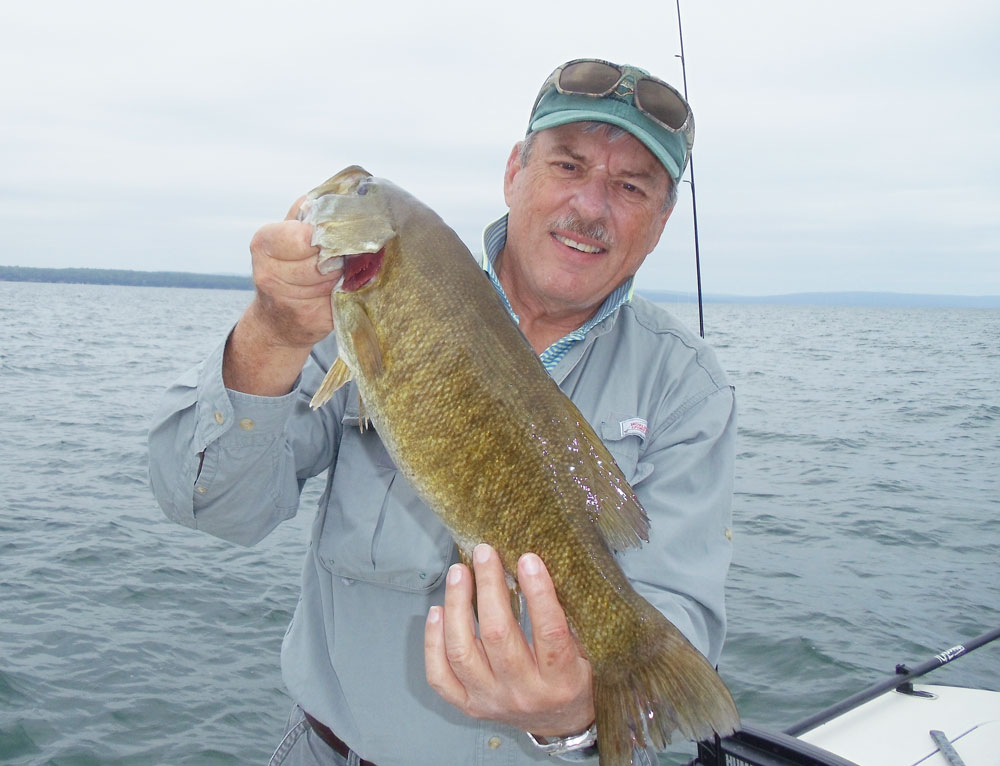
Wade Bourne (1947—2016) — A native of Clarksville, Tenn., Wade Bourne was a senior writer for Bassmaster Magazine for more than 40 years before his passing in 2016. He was a talented communicator across several media platforms, including print, television, radio and photography.
Bourne was founder and host of the award-winning “Wired2Fish/Hunt Radio,” a syndicated fishing/hunting radio show that aired year-round throughout the U.S. on 280 stations. For the 16 consecutive years prior to that, he had hosted “In-Fisherman Radio” (north, south and west editions), the largest syndicated outdoor radio show in North America.
Bourne was a prolific writer, contributing more than 3,000 articles to many of the nation’s top outdoor magazines.
His long and successful career in outdoor journalism spanned both fishing and hunting. In addition to his position with Bassmaster, Bourne was editor-at-large for Ducks Unlimited Magazine.
He was the author of six books: Fishing Fundamentals, Fishing Made Easy, Fishing Basics, Ducks Unlimited Guide to Decoys and Proven Methods for Using Them, Ducks Unlimited Guide to Hunting Dabblers, Ultimate Turkey Hunting. Bourne hosted or co-hosted “Ducks Unlimited TV” for more than a decade. His other TV credits included “Advantage Outdoors TV” on The Nashville Network (TNN) and “Southern Outdoors TV” on ESPN2.
Bourne earned a BA degree in English from the University of Tennessee. He served as a pilot in the U.S. Air Force after college before beginning his career in outdoors communications. In 2003, he was inducted into the Legends of the Outdoors Hall of Fame. In 2005 he was inducted into the National Fresh Water Fishing Hall of Fame. He received the Southeastern Outdoor Press Association’s Lifetime Achievement Award in October 2014. And in 2016, he received the prestigious Homer Circle Fishing Communicator Award from the Professional Outdoor Media Association and the American Sportfishing Association.
An ardent conservationist, Bourne had a special passion for introducing young people to outdoor sports. He worried that too few children were not being exposed to nature. To help fulfill his goal of introducing more people to nature, leaders in his hometown of Clarksville, Tennessee, began construction of the Wade Bourne Nature City in Rotary Park in Clarksville, shortly after his death. Visitors to the center will be able to enjoy free access to permanent and temporary displays and participate in hands-on activities to learn more about the natural history of the nature park.
In dedicating the center to honor Bourne, Mayor Jim Durrett of Montgomery Country, Tennessee, said, “The Wade L. Bourne Nature Center will offer countless opportunities for our children, as well as our adults, to explore, educate and help sustain the great outdoors. It’s exactly what Wade did his whole life. He explored and stayed very active in conservation efforts, but his greatest gift was educating all of us, especially our children.”
-

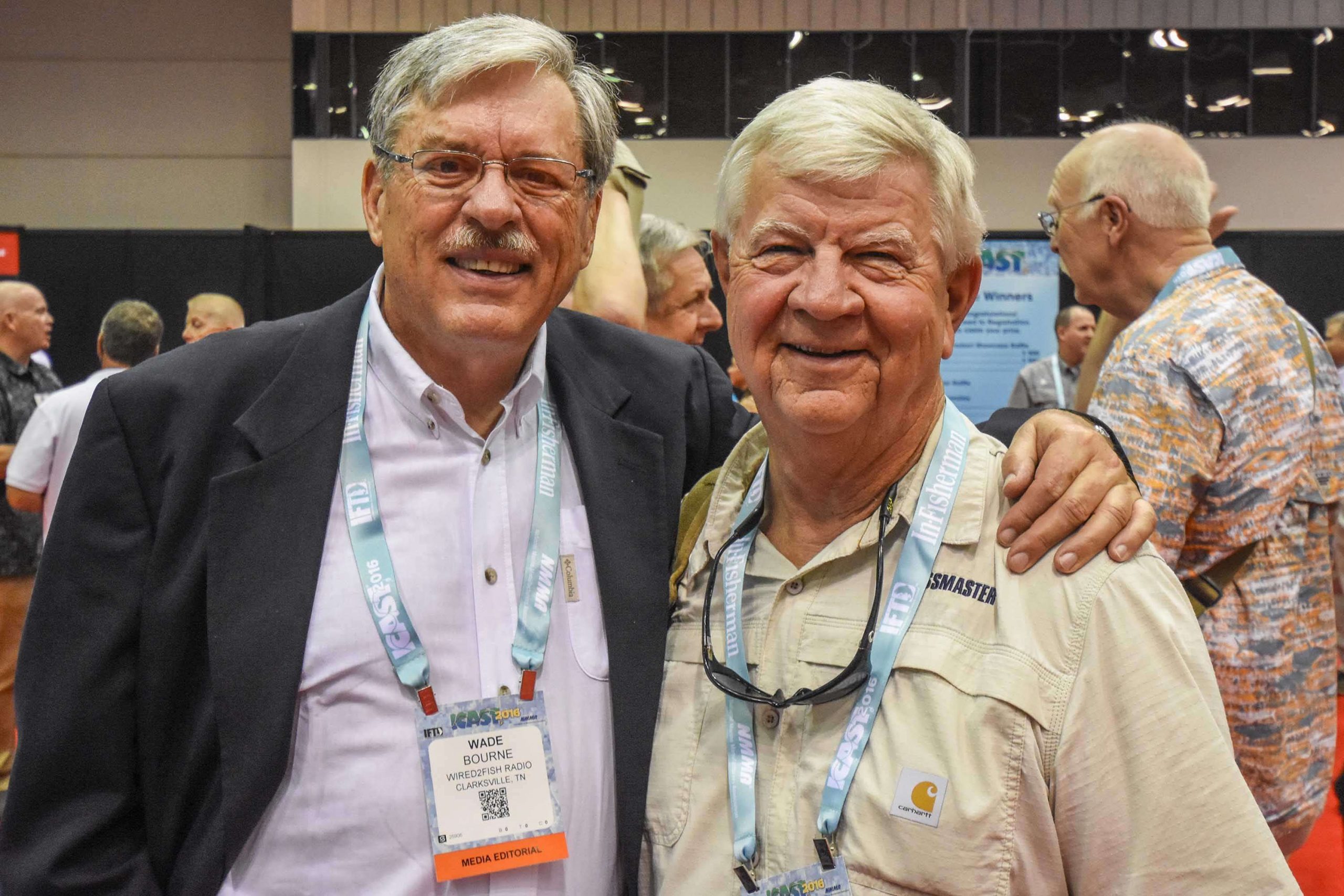
- With fellow Hall of Famer Dave Precht
-
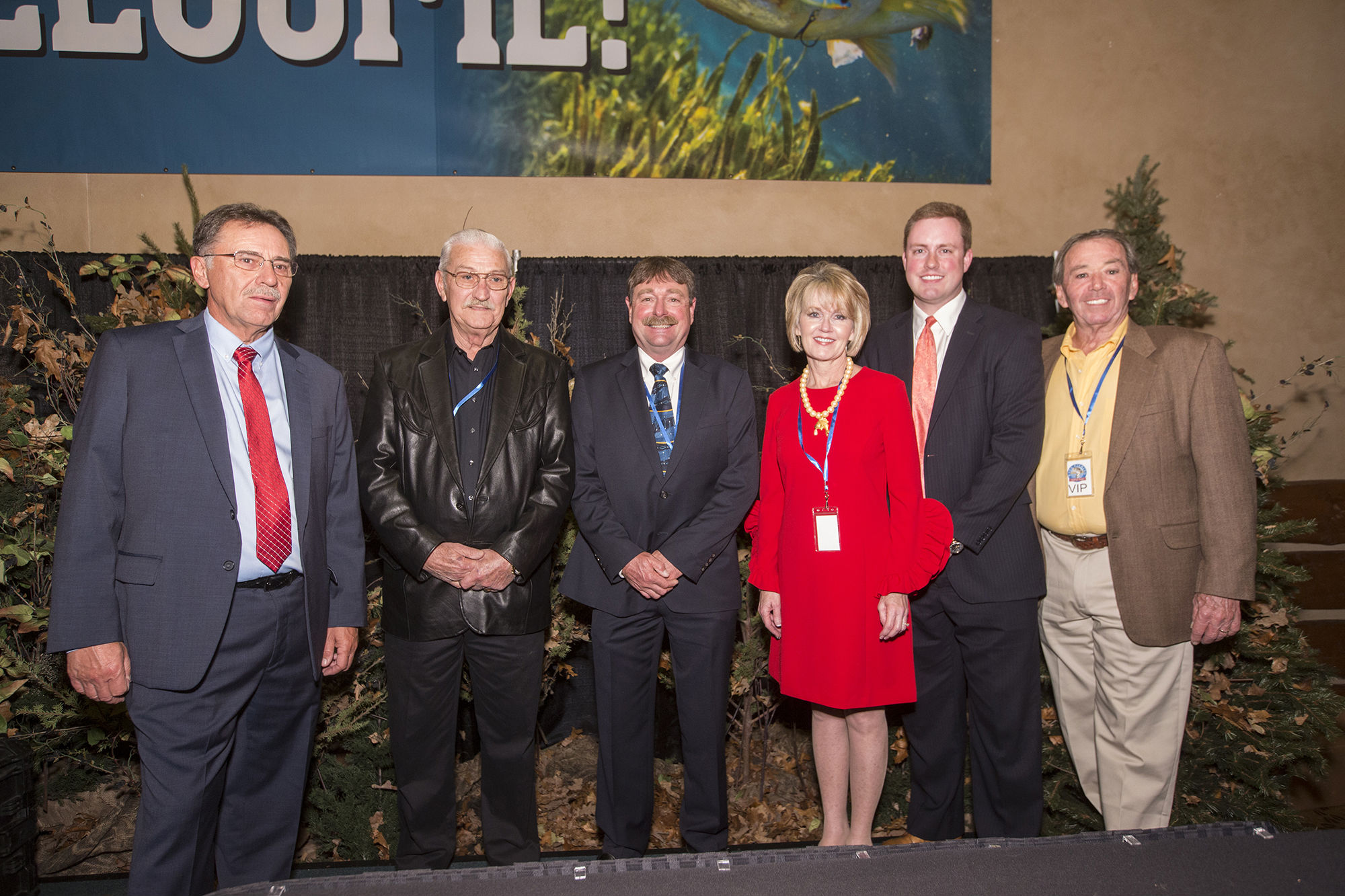
- Wife & son of Wade along with Louie Stout, Morris Sheehan, Tommy Sanders & Bob Sealy
Wade Bourne
VanDam is one of the most recognized names in bass fishing as the all-time money winner with B.A.S.S. (more than $6 million). His initials are the most-feared in bass fishing as KVD has won four of the 27 Bassmaster Classics in which he’s competed, has a record 25 B.A.S.S. wins and has seven Bassmaster Angler of the Year titles. He was the first-ever winner of ESPN’s “Outdoorsman of the Year” ESPY trophy. During only four years with the FLW Tour, he finished in the top 10 nearly 30 percent of the time, pocketed more than $370,000 in winnings and appeared in four Forrest Wood Cups. In addition to his fishing accomplishments, VanDam is a philanthropist through his KVD Foundation as well as contributions in the KVD Charity Classics with the Detroit Lions, Michigan hospitals, March of Dimes and the Make-A-Wish Foundation.
Kevin VanDam
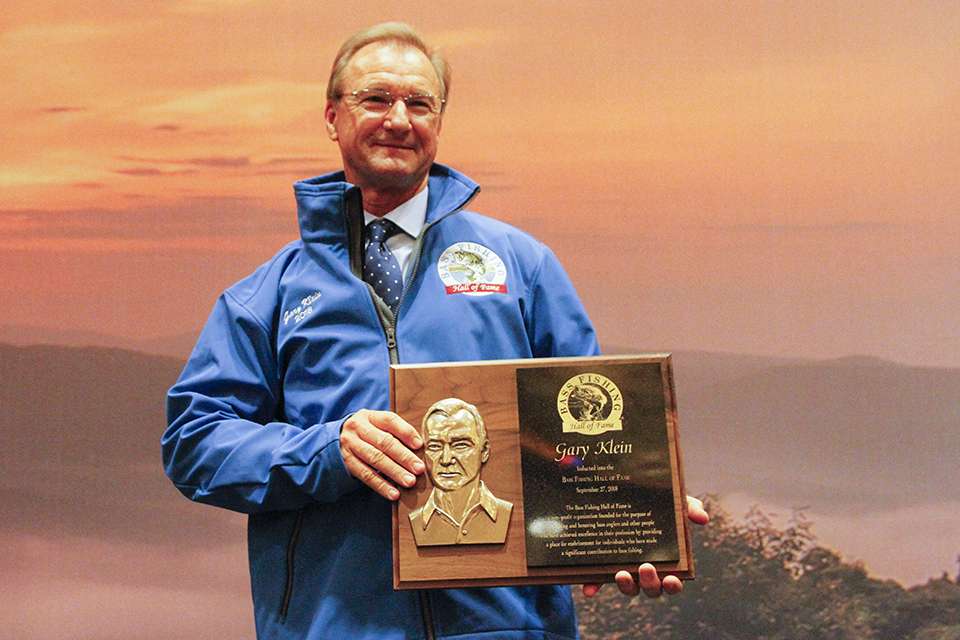
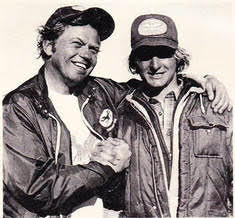
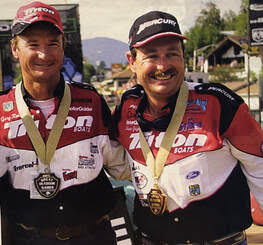
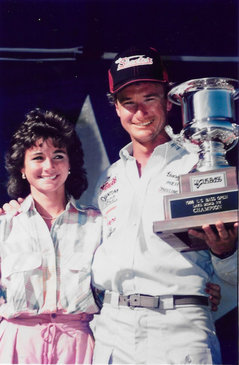
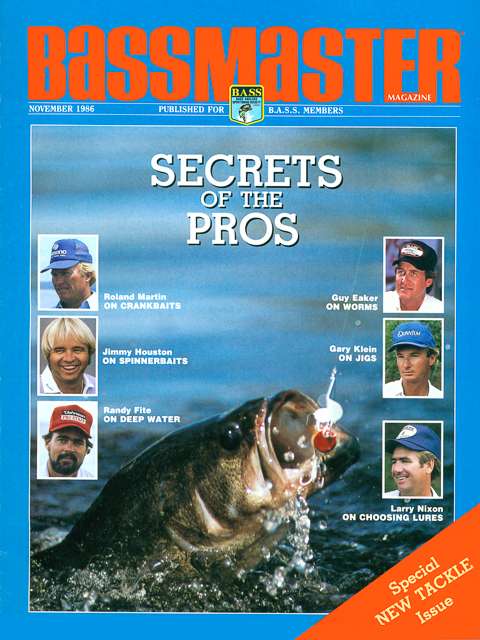
GARY KLEIN – Gary Klein, a 2018 inductee into the Bass Fishing Hall of Fame and an original member of the Hall’s Board of Directors, has known no career other than as a professional angler. As a teenager from Oroville, California, he studied under the watchful eyes of western legends including Dave Gliebe and 2007 Hall of Fame inductee Dee Thomas, before heading east to seek out his destiny on the Bassmaster Tour. He never looked back, and in over four decades of casting for cash, Klein established himself as a leading competitor, promoter and innovator.
In addition to his many on-the-water achievements, Klein’s ascent into the ranks of top pros at age 21 marked the recognition that the sport of professional bass fishing could be a full-time career straight out of school. He did not guide or work another job to support his “hobby,” but instead set out to make a living exclusively from tournament angling.
Klein showed off his angling chops from the outset, finishing 10th on Florida’s St. Johns River in his inaugural B.A.S.S. event. That was just an indication of things to come, however. In his next tournament, closer to home on Arizona’s Lake Powell, the young pro earned the first of his eight Bassmaster victories. He finished in the top 10 in five of his first seven B.A.S.S. events, with 11 straight money finishes.
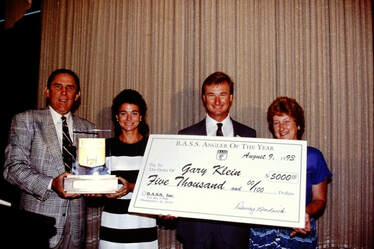
In addition to those eight B.A.S.S. wins, which spanned four separate decades, Klein qualified for 30 Bassmaster Classics, including 17 in a row from 1984 through 2000. He was the Bassmaster Angler of the Year in 1989 and 1993. One circuit could not contain his angling ambitions. Indeed, he won two FLW Tour tournaments and qualified for six Forrest Wood Cups. Klein also won the 1988 U.S. Open on Lake Mead, a then-summertime event often referred to as “the Iditarod of bass fishing.” All told, his tournament earnings are in the range of $3 million. He was also a gold medalist in the ESPN Great Outdoor Games.
Klein was initially known for bringing the innovative technique called flipping – now a staple in every serious angler’s repertoire – from the west. He used it extensively to contribute to his early success, but his skill set was not limited to that one technique, or even to just shallow water angling. Later, he was a pioneer in the field of finesse fishing and offshore angling, using the deep technique known as “doodling” a worm to earn victories on Lake Lanier in 1985 and on Bull Shoals in 1988. He remains the consummate lure and tackle tinkerer, and has been and early and enthusiastic adopter of techniques like dropshotting. Indeed, Klein prides himself on being an open thinker and a highly versatile angler.
In addition to serving as an inspiration for young western anglers in particular, Klein has also been a staunch advocate of organizing anglers to act collectively. He was an early advocate for anglers being allowed to use their own boats in the Bassmaster Classic, served as a Board Member of the Professional Anglers Association and was a co-founder of Major League Fishing and the resulting Bass Pro Tour.
-
- Gery Klein receiving his HOF induction plaque and jacket.
Gary Klein
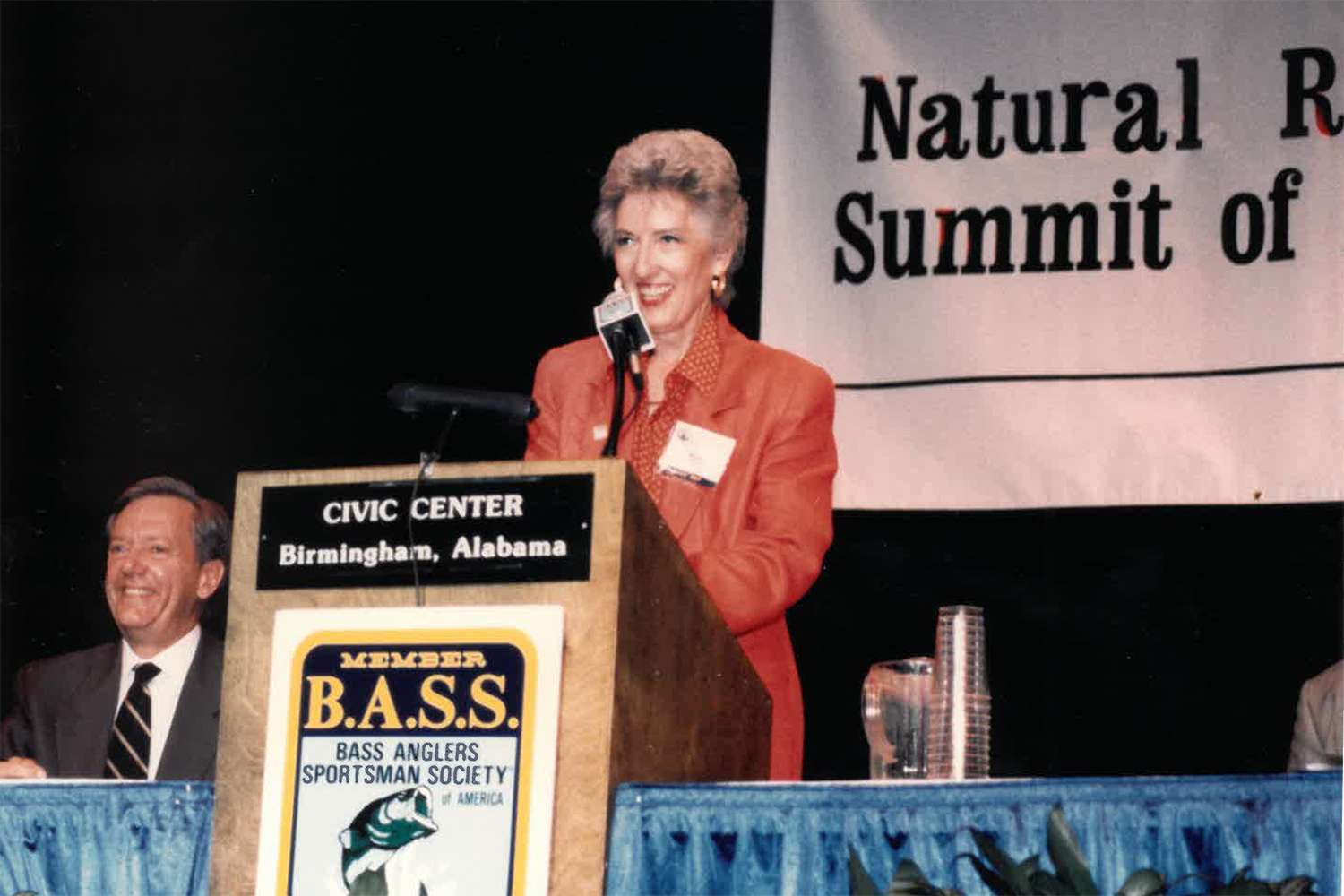
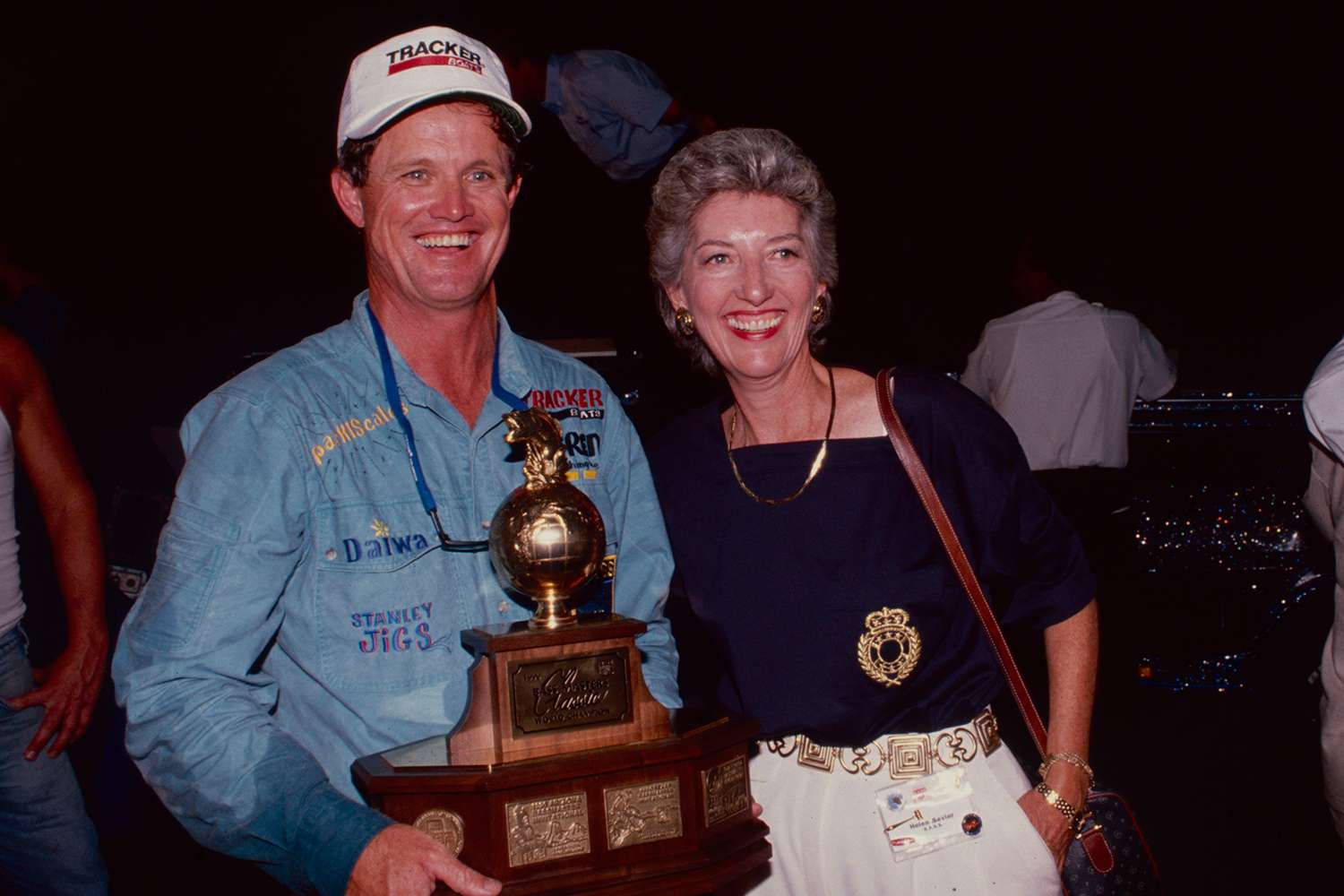
Helen Sevier — In her 31-year career with B.A.S.S. LLC, Helen Sevier rose from direct-marketing expert to President and CEO of the world’s largest fishing organization. Along the way, she quietly but unquestionably contributed greatly to the growth of the sport of bass fishing and the industry that serves it.
Signing on in 1970 as only the third full-time employee of B.A.S.S., behind Ray Scott and Bob Cobb, Sevier was tasked with growing membership in the struggling Bass Anglers Sportsman Society. Using skills honed by marketing Southern Living cookbooks, she more than doubled membership, from 9,000 to 20,000 in her first year. Membership, which translated to paid circulation for Bassmaster Magazine, grew exponentially under her leadership, until it exceeded 600,000 by the time she sold the company to ESPN in 2001.
In 1986, after Scott directed her to find a buyer for his company, Sevier put together a plan to purchase B.A.S.S. herself, in partnership with a Birmingham investment company. She quickly expanded the media component of the company to include seven full-color magazines, including Bassmaster, Guns & Gear, Fishing Tackle Retailer, Bass Fishing Techniques, Bassmaster Tour, CastingKids Magazine and B.A.S.S. Times. It was her idea to create a television series, “The Bassmasters,” focused on the Bassmaster Tournament Trail and air it on TNN, The Nashville Network, beginning in 1984. She added the “World Championship Fishing” program in the late 1990s.
She maintained the Bassmaster Tournament Trail as the world’s most prestigious tournament circuit, and she also raised payouts to more than $6 million, the highest purses at that time. With the growth of the marquee B.A.S.S. event — the Bassmaster Classic — and expansion of the media operation, she was able to attract major national sponsors to B.A.S.S. and its pro anglers, including Chevrolet, BP, Rubbermaid, Polaroid and Wrangler, along with insurance and credit card companies.
Sevier was deeply devoted to the network of affiliated bass clubs, now known as the B.A.S.S. Nation, and she helped grow membership to more than 40,000 worldwide, with state organizations in 47 states. She hired the first full-time conservation director for the organization, Al Mills, putting him in charge of coordinating the efforts of state conservation directors in the B.A.S.S. Nation. Seeing the need for a means of recruiting youngsters to the sport, she and her B.A.S.S. Nation director, Lyn Wheatley, organized CastingKids, patterned after football’s popular Punt, Pass & Kick program, in 1991. Within its first decade, more than 1.5 million children had competed in flipping, pitching and casting, with the winners earning more than $1 million in scholarships over the years.
Actively involved as a volunteer leader in the sportfishing industry, Sevier was elected chairman of the Board of Directors of the Sport Fishing Institute in 1987, and she helped guide its merger with the American Fishing Tackle Manufacturers Association to form the American Sportfishing Association (ASA).
In recognition for her accomplishments and leadership in resource conservation, Sevier received the William E. Ricker Resource Conservation Award from the American Fisheries Society in 1997. That same year, the U.S. Department of the Interior presented her with its Conservation Service Award, and in 2002, she was given the Norville Prosser Lifetime Achievement Award from ASA. Sevier was inducted into the National Freshwater Fishing Hall of Fame in 2004.
-
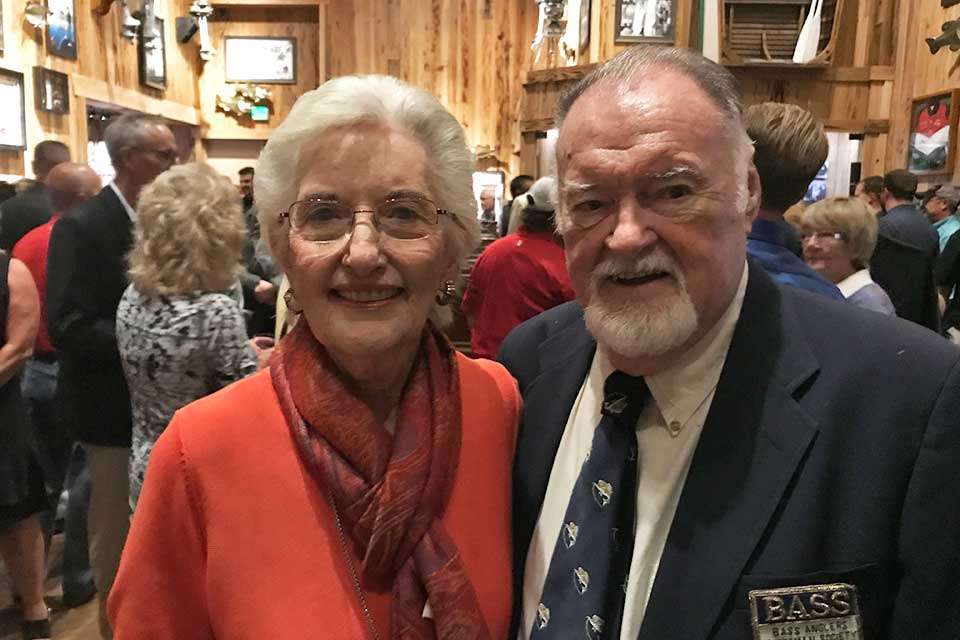
- Sevier with Bob Cobb at the 208 HOF Induction Banquet
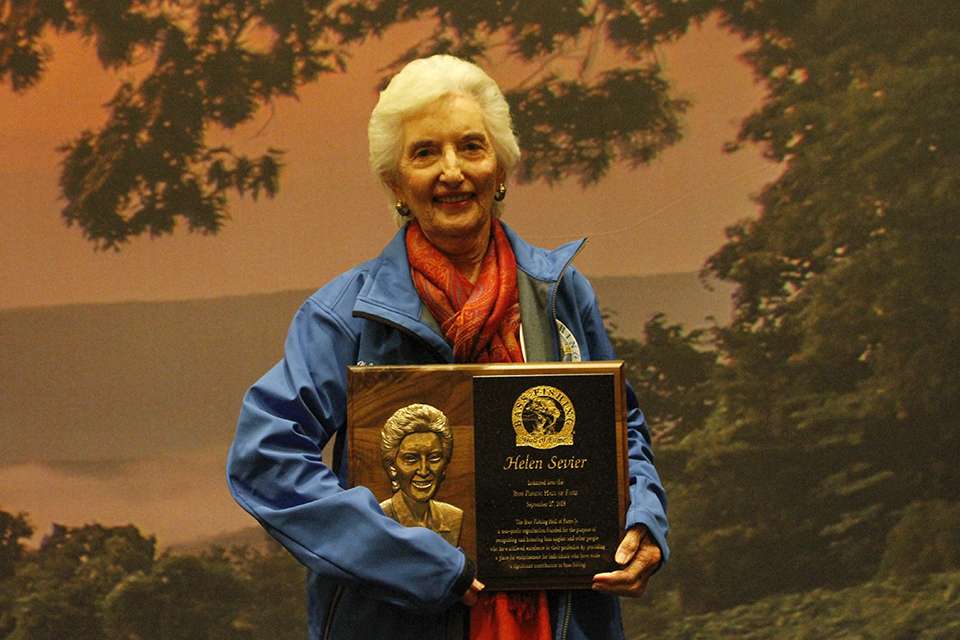
Helen Sevier
For more than two decades, Tommy Sanders has been covering competitive bass fishing at the highest level. Sanders is synonymous with outdoors TV, gracing ESPN Outdoors for more than a quarter century. Jerry McKinnis, a model of longevity with 44 years of The Fishin’ Hole, said he believes Sanders holds the distinction of appearing on the network more than any of the thousands of other personalities. Besides starting FLW coverage, Sanders has hosted Stihl Timbersports, the Great Outdoor Games and the wraparound segments for the ESPN Outdoors block. But he’s mainly known as the host of The Bassmasters. Recently inducted into the Arkansas Outdoor Hall of Fame, Sanders is also known for his recent work as host of “Bassmaster LIVE” as well as host duties on 18 Bassmaster Classics.
Tommy Sanders
Dr. James A. Henshall (1836-1925) — was the author of the first book on bass fishing, Book of the Black Bass in 1881, and was the sport’s earliest advocate of note. A surgeon by trade, he designed the most popular rod and reel of his day, though he chose to patent neither because he believed his creations should be available to all manufacturers and anglers. He was also an innovator in hatchery management during his time with the U.S. Fish Commission. Henshall predicted the decline of trout fishing and habitat as well as the rise of the bass in sportsmen’s eyes. Though he wrote extensively for several outdoor publications even to the end of his long life, he is probably best remembered for a single line in bass book: “I consider him, inch for inch and pound for pound, the gamest fish that swims.” It is still the greatest comment on the greatest of game fish.