2025 Bass Fishing HOF Inductees

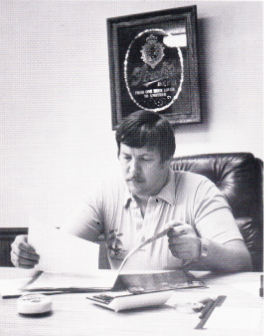
Mike Whitaker
2026
Mike Whitaker transformed bass fishing by bridging the gap between casual anglers and professional competition. As the founder of Operation Bass in 1979, Whitaker revolutionized the sport with his vision of professionally run, high-quality tournaments that were accessible to the everyday fisherman. His leadership not only reshaped competitive fishing but also laid the groundwork for many aspects of the industry that continue to thrive today.
Whitaker’s journey began in Gilbertsville, Kentucky, where his love for fishing and entrepreneurial spirit intersected. After a successful career in sales, he turned his attention to organizing bass tournaments with a clear mission: to give working-class anglers an opportunity to compete and succeed without the financial burdens typically associated with professional fishing. From this vision, Operation Bass was born.
In 1983, Whitaker forged a groundbreaking partnership with Pinkerton Tobacco Company to launch the Red Man Tournament Trail. This circuit offered affordable entry fees and a clear path to the prestigious All-American Championship, where anglers could compete for substantial cash prizes. The inaugural All-American on Kentucky Lake awarded $50,000 to the winner, and just a year later, Shaw Grigsby made history by winning the first $100,000 tournament paycheck in the sport on Florida’s Kissimmee Chain of Lakes.
Whitaker’s innovative approach extended beyond the tournament structure. He was a pioneer in securing non-endemic sponsorships, bringing companies outside the fishing industry into the fold. This move helped elevate the sport’s visibility and financial viability. The Red Man Trail’s success demonstrated that competitive bass fishing could attract mainstream appeal, a legacy that continues to benefit anglers and industry stakeholders alike.
In 1996, Whitaker sold Operation Bass to Minneapolis business mogul Irwin Jacobs, who expanded its reach and renamed it FLW Outdoors. Under Jacobs’ leadership, the organization grew into the world’s largest tournament-fishing entity, hosting more than 280 events annually across 17 countries. However, it was Whitaker’s vision and foundation that made this growth possible.
Like Ray Scott, Whitaker fundamentally changed the landscape of competitive bass fishing. By creating accessible opportunities and setting new standards for professionalism and sponsorship, he empowered countless anglers to pursue their dreams. His contributions have left an indelible mark on the sport, and his place in the Bass Fishing Hall of Fame is well-deserved.
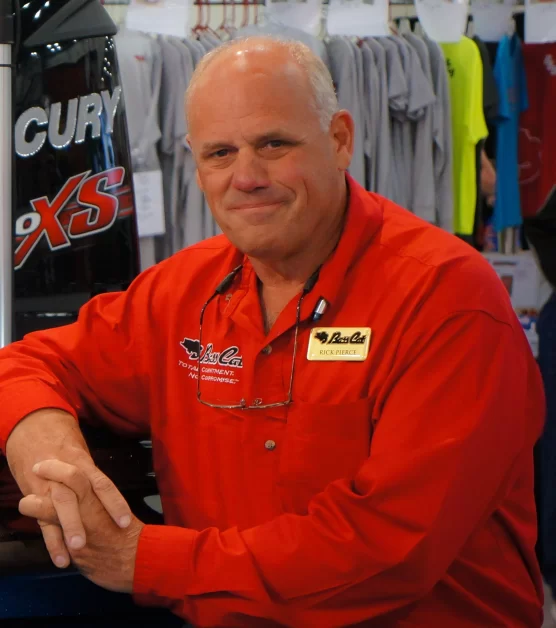
Rick Pierce
2026
Rick Pierce was born into the bass boat business, the son of Bass Cat founders Ron and Jan Pierce. He began working for the company over 50 years ago, at the age of 13, and officially began his career with the company upon graduation from high school, taking over day to day management of the company shortly thereafter. Starting in 1995, he functioned as the company’s president until its transfer to Correct Craft in 2023, after which he served as a mentor and advisor on the Executive Team and as the Executive Ambassador.
His name has become synonymous with Bass Cat, and he built a 90-plus percent customer loyalty rate. However, he has done far more than just design, refine and manufacture tournament-ready boats. His efforts have served not just his own company, but also the industry as a whole. He has competed in Bassmaster events, served as a mentor to anglers and members of the industry, and set a standard for customer service that remains unmatched.
He has partnered with brands including Mercury Marine, Yamaha, Lowrance, Humminbird, and Minn Kota to improve consumer offerings, collaborating on products like Mercury’s 250 Pro XS and Minn Kota’s Spot Lock technology, both of which in turn changed the bass boat industry for the better.
Starting in the 1980s, his designs drove the bass boat market to offer the caliber of tournament-ready boats available today. Notable innovations taken for granted today include: larger fuel tanks, interior storage lighting, digital dashes, the pivot tongue and perhaps most notably the recessed trolling motor pedal. Starting with the 2000 model year, Bass Cat integrated full fiberglass construction. This meant that the floor, transom, stringers, hull, deck and storage compartments were all built to handle the stresses of tournament fishing. He anticipated and built consoles to handle increasingly larger graphs.
Pierce and BCB have won numerous awards from NMMA, JD Power and others for their innovations. He also navigated the purchase of Yar-Craft for a multi-species lineup and revised that lineup, bringing innovations from the bass boat world to walleye fishing. He has also consistently innovated how he presents his products at outdoor shows. That included elevating a 20-foot bass boat on a rotating circular pedestal and then raising the full boat vertically.
Bass Cat was the first bass boat brand to have an owners tournament, running continuously since 1987 with average participation of over 500 boats. Subsequently, the company added regional events. Pierce has launched all but two days of the tournaments.
Pierce has mentored hundreds of anglers, helping to start the careers of even anglers associated with other brands, including Gerald Swindle and Hall of Famer Mark Davis. This continues today with the likes of Mike Iaconelli, Hank Cherry, Ben Milliken, John Crews and Trey McKinney.
Pierce also fished over 100 Bassmaster tournaments.
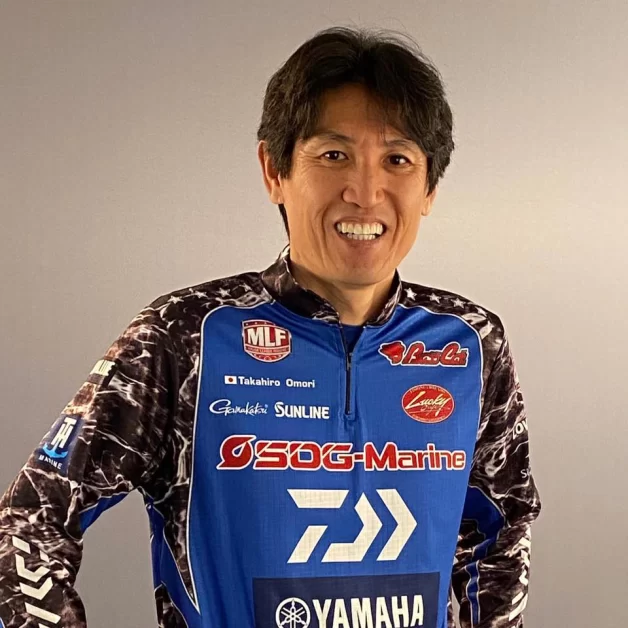
Takahiro Omori
2026
Takahiro Omori was born in Tokyo, raised in rural Japan, and is the most successful professional angler who’s ever immigrated to America based on career earnings and his famous 2004 Bassmaster Classic win.
Omori, 53, became the first non-U.S. pro to win a major bass fishing title when he won the 2004 Bassmaster Classic at Lake Wylie in South Carolina. That in itself was a major accomplishment because the support system that exists today for foreign born (and particularly non-English speaking) anglers was not yet in place. His victory was meaningful to the entire sport and the entire industry because it proved that this was an internationally significant endeavor with major industry implications and brought widespread coverage to bass fishing from non-endemic publications.
While Omori wasn’t the first Japanese pro to fish in the U.S., he has been the most successful and has provided an example for others from Japan (as well as from places like Australia and Canada). There was not another international Classic winner until nearly 20 years later, when Canadian Jeff Gustafson, with far fewer obstacles, earned a Classic trophy.
Omori has been successful on all three major circuits, and truly sacrificed to get where he is, living the bass lifestyle from day one. He even built a swimming pool for the express purpose of testing lures. There was even a documentary made about his obsession.
He has earned just shy of $3 million from B.A.S.S., MLF/FLW, putting him in the uppermost echelon by that measure. He won 7 times at B.A.S.S. (qualifying for 12 Classics), as well as at FLW. In addition, he won the 2019 MLF Summit Cup, the 2020 Patriot Cup, and qualified for three REDCRESTs and seven Forrest Wood Cups.
Omori’s father, however, was dead set against him fishing for a living, saying he had to attend college or move out of the house after high school. Omori’s will was just as strong so he moved to an island in Lake Kawaguchi, living in a tent and fishing. He also worked a variety of jobs, such as bellhop, dishwasher and waiter, to survive.
That work ethic and strong desire paid off with a fishing career of over three decades that shows no signs of slowing down.
Omori’s catchphrase “I knew it” was born during his incredible final-hour flurry on the final day of the 2004 Classic when he caught several keepers on a shallow-running crankbait. It is often imitated by endearing fans and fellow anglers to this day.
Omori, who makes his home in Emory, Texas, near Lake Fork, has been instrumental in driving bass tackle trends with some of his techniques and performance with multiple companies. Despite hailing from Japan, he does not typically use finesse techniques, preferring “Texas-style” power fishing, a true melding of cultures.
Pam Martin-Wells
2026
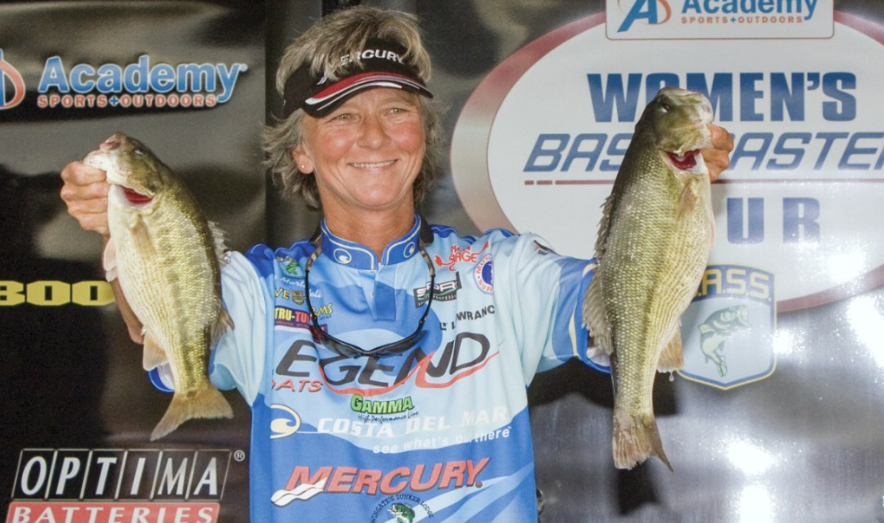
It’s hard enough for any first timer in the Bassmaster Classic to maintain focus in the incredibly frenetic, hectic pace of Classic week. Add to that the pressure of being somewhat of an outsider — the only female in the male-dominated world championship of bass fishing — and you must be in awe of Pam Martin-Wells.
Only the second female angler to qualify for the Classic, Martin-Wells was the first (and only) woman to make the final-day cut and compete on Championship Sunday. She caught a limit every day, weighed in 25 pounds and finished 22nd in the star-studded field, outscoring some of the most celebrated anglers in the sport.
Easily the most successful female angler of all time, she dominated every women’s fishing circuit she tried, starting with Bass’n Gals in 1985 and continuing through the Women’s Bassmaster Tour (WBT), WBFA and Lady Bass Anglers (LBAA). She is the all-time leading money-winner in women’s fishing, having earned 32 national tournament victories.
Martin-Wells holds 10 angler of the year titles on those trails. Clinching AOY on the Women’s Bassmaster Tour in 2009 led to her berth in the 2010 Classic. She won the very first WBT event in 2006 and added three more victories, eight Top 5s and seven Top 10s over the next four seasons.
She qualified for 22 season-ending “classic” championships on women’s tours, winning six times — including the Women’s Bassmaster Classic in 2005.
Her contributions to fishing were recognized not only through her competitive accolades, but also through her enduring work in education and outreach. Whether she was speaking at a youth fishing clinic, coaching a college team or offering advice to a young woman picking up a baitcaster for the first time, Martin-Wells fished with purpose — and lived with impact.
Martin-Wells also served as the head coach of the Emmanuel College fishing team, where she became a beloved mentor and guiding force for countless student anglers. Her leadership extended far beyond the water — she nurtured young talent, instilled confidence and left a profound and lasting impact on everyone fortunate enough to be coached by her. Under her guidance, the Emmanuel program flourished, and her legacy will live on in every student she inspired.
Martin-Wells passed away in 2025 after a four-year battle with ovarian cancer. Her dedication to the sport truly embodies the Bass Fishing Hall of Fame’s mission to celebrate, preserve and promote the sport of bass fishing.
Don Iovino
2026
In the infancy of B.A.S.S. tournament competition and for years afterward, the sport was dominated by heavy-handed, shallow-water techniques developed in the South. Some called it “bubba fishing.”
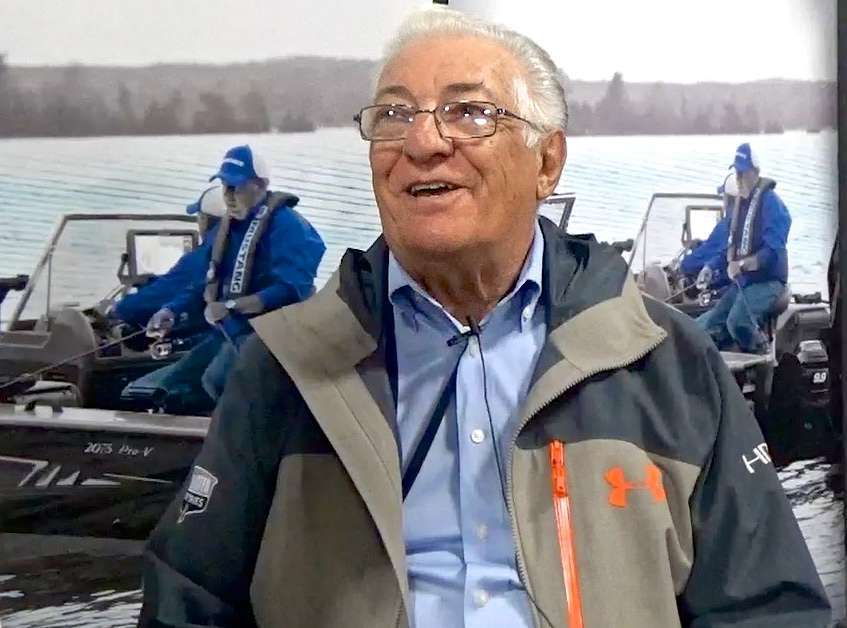
Surfacing in the mid-1970s, Don Iovino’s western finesse approach to bass fishing was the antithesis of bubba fishing. Iovino’s deep-water doodling and other light-line techniques transformed bass fishing in clear-water reservoirs of California, Nevada, Arizona and elsewhere, and they eventually added a new dimension to bass strategies throughout the country.
Finesse offerings that win tournaments everywhere — shaky heads, drop shots and finesse worms, among others — were heavily influenced by, if not directly derived from, Iovino’s finesse philosophy.
Iovino, who lives in the Los Angeles area, was converted to bass fishing in his 30s from trout fishing, which he practiced by pinpointing fish on sonar in deep water and then dangling live nightcrawlers at their depths. He was frustrated at how many big bass took the worms — until he learned about tournament bass fishing.
He had a California luremaker mold some limber, soft-plastic worms, which Iovino began using to win bass boats and other top tournament prizes. He won the U.S. BASS 1984 Grand National Fly-Away Tournament at Lake Mohave on the Nevada-Arizona border, along with five other national titles, and he was the U.S. BASS Angler of the Year in both the West and North divisions in 1985.
Through his trailblazing book, “Finesse Bass Fishing & the Sonar Connection” (written with George Kramer), and countless interviews, videos and seminars, Iovino has taught millions of anglers how to find and catch bass in deep, clear water. His company, Don Iovino Products, was founded in 1974 and introduced painted slip sinkers and some of the first hand-poured soft plastic reapers and finesse worms.
Across a career in sportfishing spanning nearly half a century, Iovino likely has done more to share the gospel of finesse fishing than anyone. He has earned his title, “The Godfather of Finesse.”