Jack Wingate
Jack Wingate (1929-2011)—Revered as the “Sage of Seminole,” Jack Wingate started out in the fishing business during Harry Truman’s presidency. He was a tireless promoter of Lake Seminole, a big bass factory on the Georgia/Florida border. As the owner of Wingate’s Lunker Lodge, he attracted the most talented anglers from within a day’s drive of the legendary reservoir near Bainbridge, Georgia.
Wingate kept a card file on those regular customers, and when Ray Scott contacted him for referrals of top anglers to compete in his first bass tournament in 1967, Jack generously shared their names and contact information. When the first All American Bass Tournament got underway on Beaver Lake, Arkansas, in June 1967, 22 of the 106 competitors were Wingate’s customers. Wingate himself fished the landmark event, which marked the birth of competitive bass fishing, finishing in the Top 10.
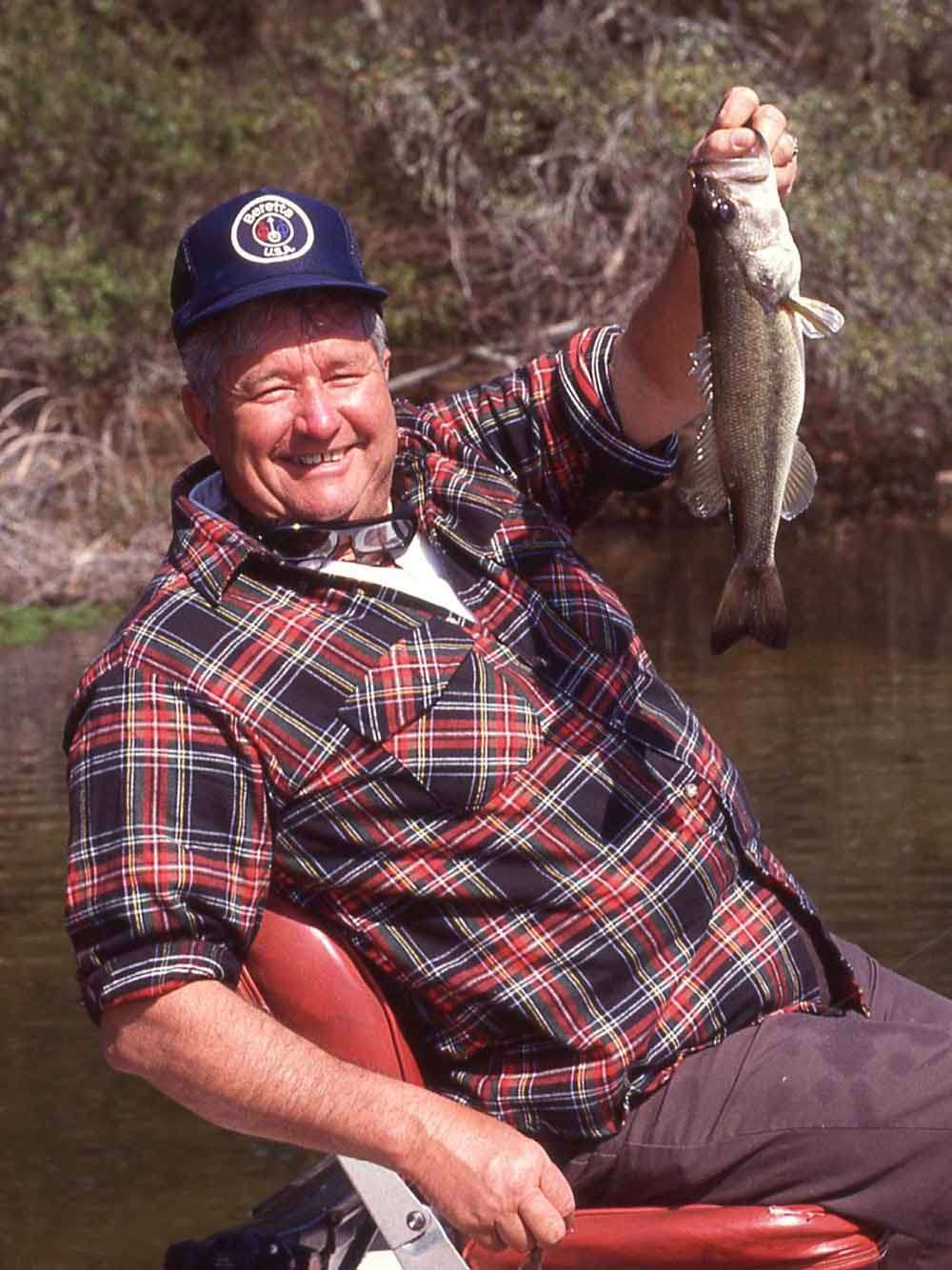
After a brief flirtation with life as a bass pro, Wingate settled back down as lodge owner, fishing guide and family man. Working with local tourism officials, he arranged to host one of Scott’s first fishing derbies on Lake Seminole. The Seminole Lunker Bass Tournament was the first to be held after Scott founded the Bass Anglers Sportsman Society (B.A.S.S.), and it drew 150 anglers from 15 states. Wingate — smiling broadly and holding up two lunker bass from Seminole — was the cover model for the second issue of Bassmaster Magazine.
Wingate devoted his life to helping others learn to love fishing. In 1966, he founded Wingate’s Fishing Camp for Boys at Lake Seminole. For more than three decades, he and his staff taught thousands of youngsters all about bass fishing, fly fishing, gun safety, boat handling, Native American lore and conservation ethics. “I never made a cent off of it,” he once told a writer, “but by God I had a good time. I wouldn’t trade it for nothing.” He added, “You ain’t never seen an excited face until you’ve seen a kid catch his first bass.”
Born September 1, 1929, in Faceville, Georgia, Wingate grew up on ground that eventually was flooded by George Woodruff Dam to impound Lake Seminole. He died in 2011 and was inducted posthumously into the Bass Fishing Hall of Fame the following year. He had previously been inducted into the Legends of the Outdoors Hall of Fame, and he was named a “Legendary Guide” by the Freshwater Fishing Hall of Fame in Hayward, Wisconsin. Shortly before his death, he said, “My only wish is that I had more time on this earth to teach more young people the sport of just fishin’.”
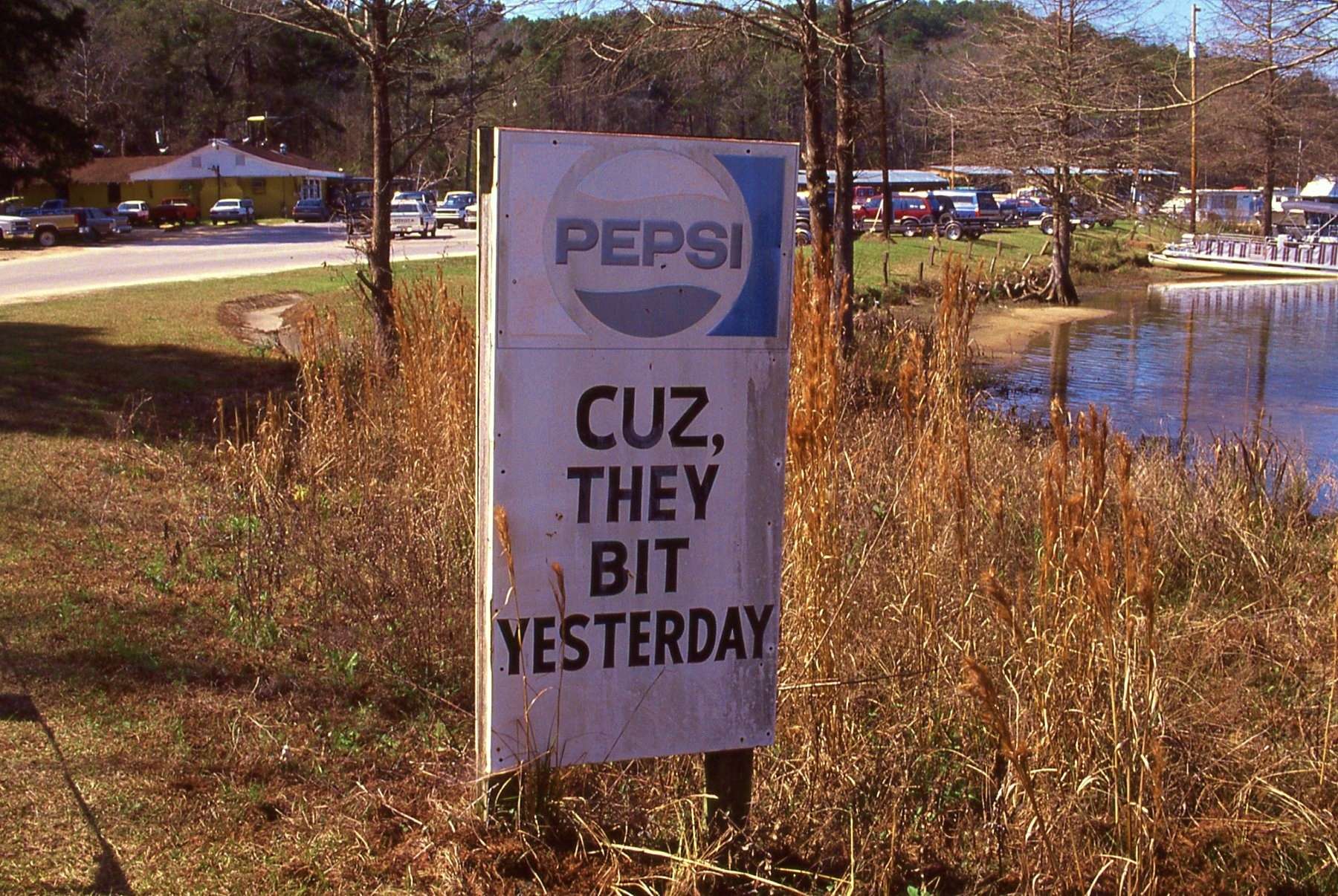
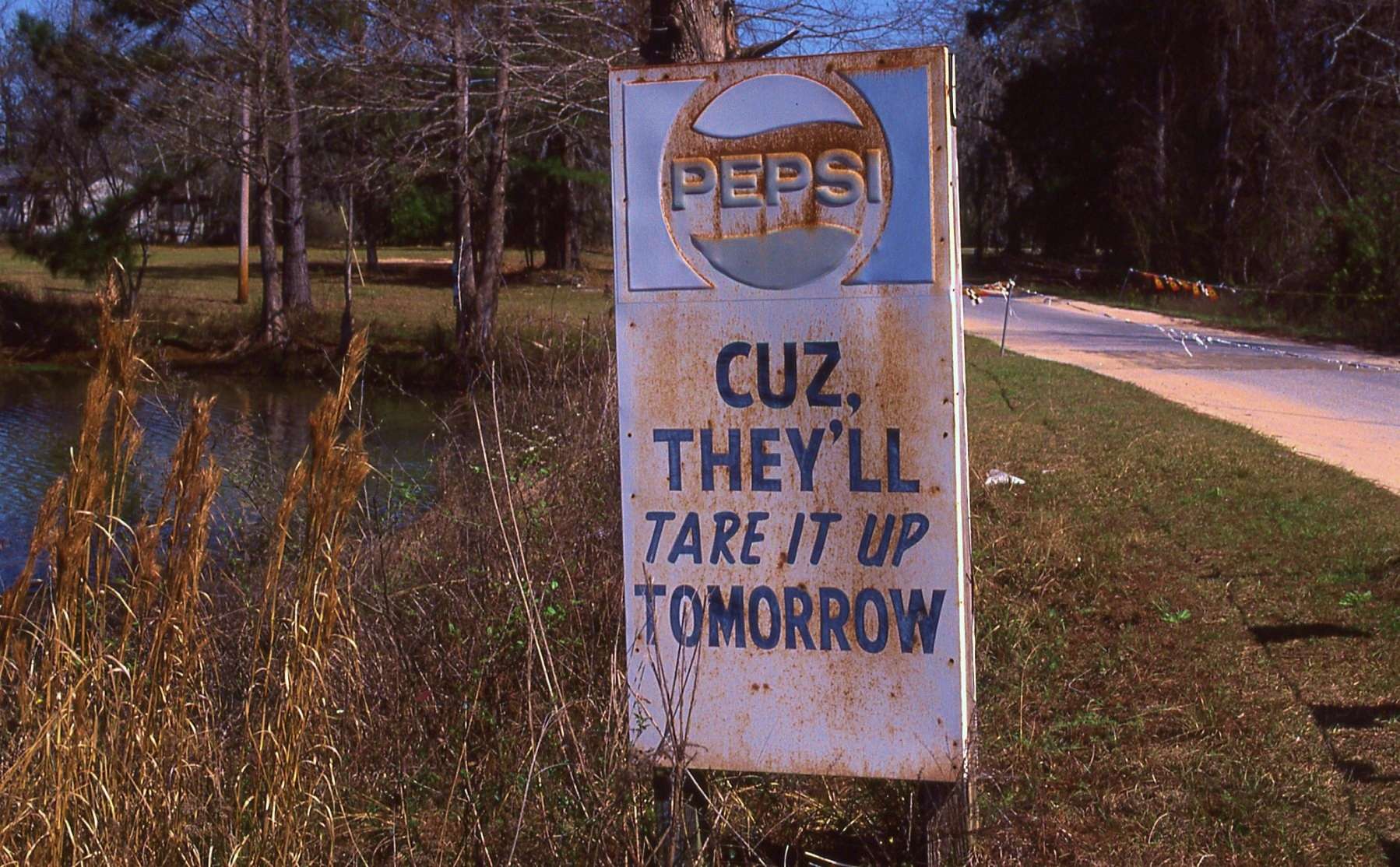
Customers visiting Wingate’s Lunker Lodge during that era will remember the pair of signs at the entrance to the property. The one at the entrance read, “Cuz, They Bit Yesterday.” At the exit, the other sign said, “Cuz, They’ll Tare It Up Tomorrow” — typical homespun humor from Jack Wingate.
Jack Wingate
As an avid skin diver, Darrell Lowrance learned much about the schooling habits and preferred locations of freshwater fish. Along with his father, Carl, and brother, Arlen, he set out to design a portable electronic device that would help fishermen and boaters determine depth of the bottom and other underwater objects. The famous ‘Little Green Box’ was introduced in 1959 and it revolutionized bass fishing. As president and CEO of the Lowrance company, Darrell was responsible for many breakthroughs in marine electronics, including the first sonars capable of high-speed performance (1965), the first graph recorder (1974), the first integrated sonar/GPS unit (1995) and many others. During 1983 and 1984, Lowrance served as president of the American Fishing Tackle Manufacturer’s Association (AFTMA), and was also director of the National Association of Marine Products and Services 1989. Lowrance retired in 2007 following the company’s acquisition by Navico.
Mr. Lowrance passed away at the age of 80 in March 2019

-
- The FISH LO-K-TOR is one of the most prolific sonar devices ever produced, with over 1 million sold from 1959 to 1984
Darrell Lowrance
Mike Folkestad, who makes his home in Orange, Calif., is nothing short of a fishing legend, although his name isn’t widely recognized outside of his native West Coast domain. However, he did fish back East in Bassmaster Invitationals in the late 1980s and later fished the Top 100s in the early ’90s. Folkestad’s accomplishments in the West are vast and unmatched. He’s a three-time WON Bass U.S. Open champion with back-to-back victories in 2001-02. He holds major titles in all western circuits including WON Bass, EverStart, Western Bass, B.A.S.S., West Coast Bass and US Bass. He’s fished one Bassmaster Classic and one Forrest Wood Cup. He holds the Bassmaster Invitational record for lowest winning weight, which he set at the Harris Chain in 1992 with a total weight of 14-10. And he’s not done. In March 2010 he set a new Lake Havasu all-time one-day weight record of 26.63 pounds.
Mike Folkestad
Blake Honeycutt (1929 – 2022) Most fans remember Honeycutt of Hickory, N.C., as the holder of the all-time heaviest winning weight in a B.A.S.S. tournament – 138 pounds, 6 ounces at the 3-day Eufaula National in July 1969. A standout angler in the seminal years of the sport, Honeycutt qualified for three Bassmaster Classics and ranked in the top-20 in half the events he entered. But his contributions to the sport run much deeper. As a teenager, he helped Buck Perry test, design and market Perry’s Spoonplugs. Honeycutt later partnered with Tom Mann and Yank Dean to launch Humminbird. As the East Coast rep for Ranger Boats for 20 years, Honeycutt also helped design layouts for the Ranger TR series and developed an electric anchor for bass boats. Like his mentor, Buck Perry, Honeycutt is considered one of the fathers of structure fishing.
Blake Honeycutt
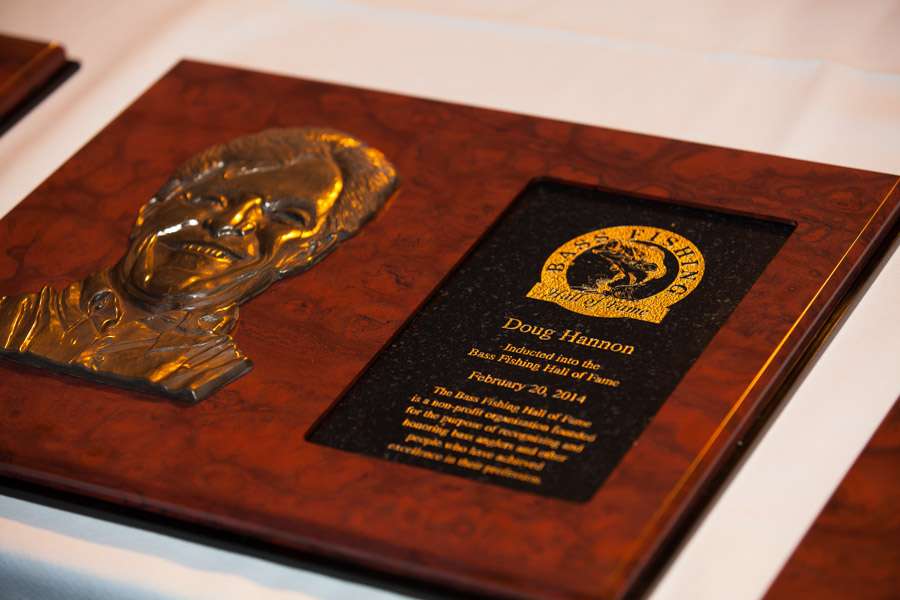
Doug Hannon (1947 – 2013)— Big-bass angler, bass conservationist and inventor Doug Hannon was known throughout the bass fishing world as “The Bass Professor.” Hannon was born in Canada and moved to the U.S. at age 7. While an undergraduate in psychology at Tulane University in New Orleans, Hannon visited the Texas ranch of his girlfriend’s (and future wife’s) family, where he went bass fishing for the first time. It proved to be a life-changing experience — Hannon became so fascinated with bass that immediately after graduating, he moved to Florida, which in the early 1970s was the big bass capitol of America.
Here, thanks to a trust fund provided by his late father, Hannon, freed from financial constraints, embarked upon his quest to learn all he could about big bass and how to catch them. He began by interviewing Florida’s leading big bass anglers, many of them reclusive loners, and from them gained inside knowledge about the haunts and habits of the Sunshine State’s giant bass.
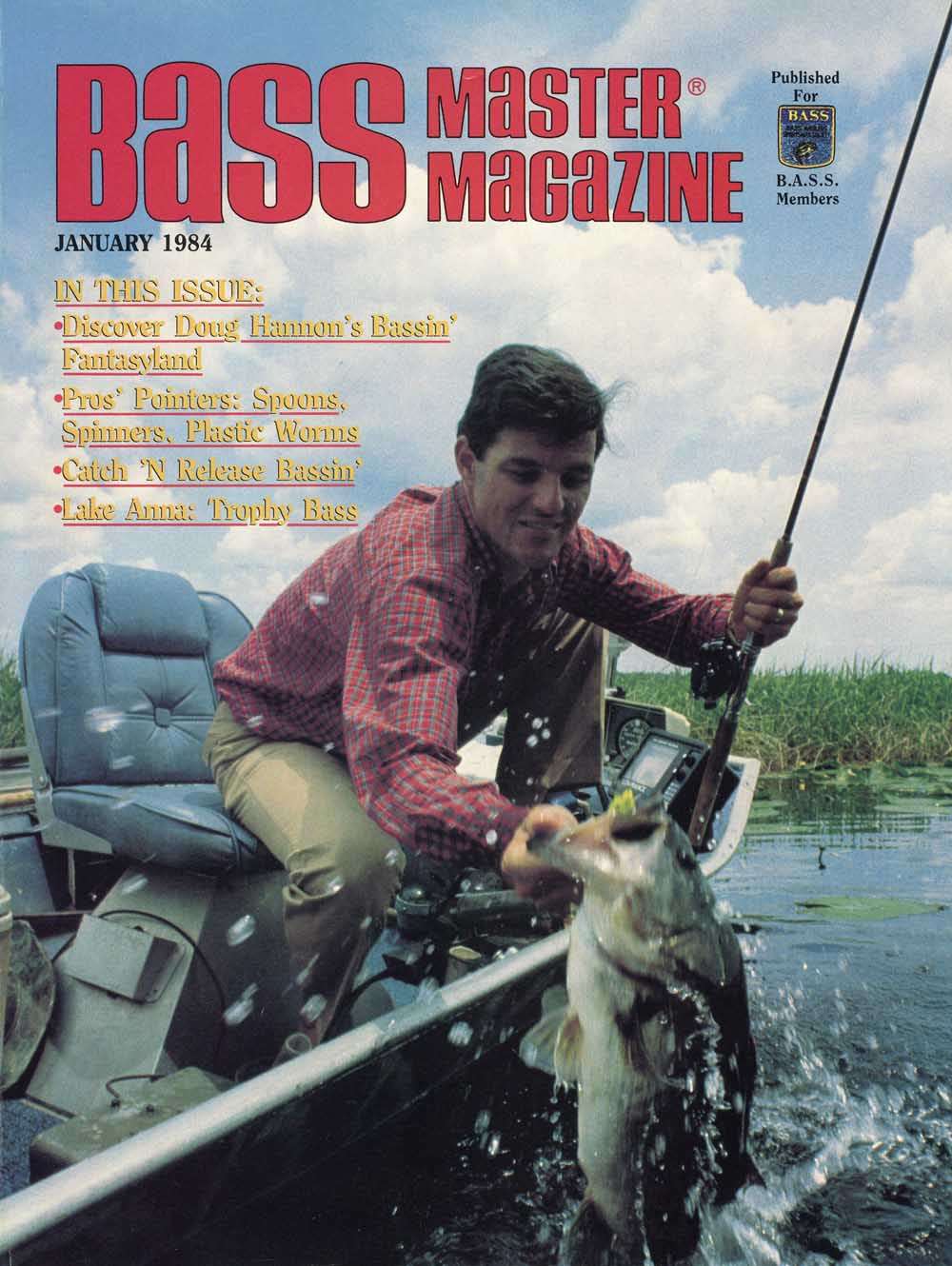
Hannon next began guiding for big bass on a catch-and-release-only basis. His notoriety grew quickly after journalist Frank Sargeant, impressed both by Doug’s prowess at catching lunkers and his in-depth knowledge of bass behavior, dubbed Hannon “the Bass Professor” in his Tampa Tribune outdoor column. By the mid-’80s, Hannon had caught and released over 500 bass weighing 10 pounds or more, and had become nationally renowned through frequent articles in Bassmaster and other fishing publications. Hannon’s quirky personality and nature-based approach to bass fishing stood in stark contrast to the braggadocio and “run-and-gun” style of many tournament anglers of the day.
He realized that a stealthy approach was necessary for catching giant bass from Florida’s shallow and highly-pressured lakes and rivers, so he did most of his fishing from a 16-foot aluminum boat with a 40-horsepower outboard – a far cry from the fast and flashy fiberglass bass boats booming in popularity at the time. Hannon’s boat typified his iconoclastic approach to bass fishing. He painted it in camouflage colors so it would blend in, rather than stick out, from the Florida bass’ clear, shallow environment. Its lack of raised casting decks allowed Hannon to maintain the lowest possible profile so as to not alert wary lunkers to his presence, and its up-front stick steering allowed him to thread his way through vast untapped expanses of weed-choked bass habitat. Hannon knew that big bass and hordes of people don’t mix; he caught most of the 800-plus giants he logged during his career, including a 17-pound largemouth, from small, remote lakes and rivers, many lacking even rudimentary launch ramps.
Hannon spent thousands of hours on the water by himself, fine-tuning not only his angling skills but also his prowess as a diver and underwater photographer.
Blessed with an innate talent for invention, Hannon held nearly 20 patents for fishing-related innovations, including the first truly weedless trolling motor propeller and the popular MicroWave bass rod guide system. He was arguably the earliest proponent of catch and release of big bass and used his magazine articles as a bully pulpit to stress the enduring value of photographing and releasing these superior fish verses killing them and displaying them as a mounted trophy. Hannon built a large bass research tank in his backyard and worked with tournament organizers including B.A.S.S. to develop livewell potions formulated to reduce the mortality of released bass. He authored and co-authored several books on bass fishing, and his “Bass Professor” segment was a popular component of “The Bassmasters” television program. Hannon died in March 2013 at the age of 66.
Doug Hannon
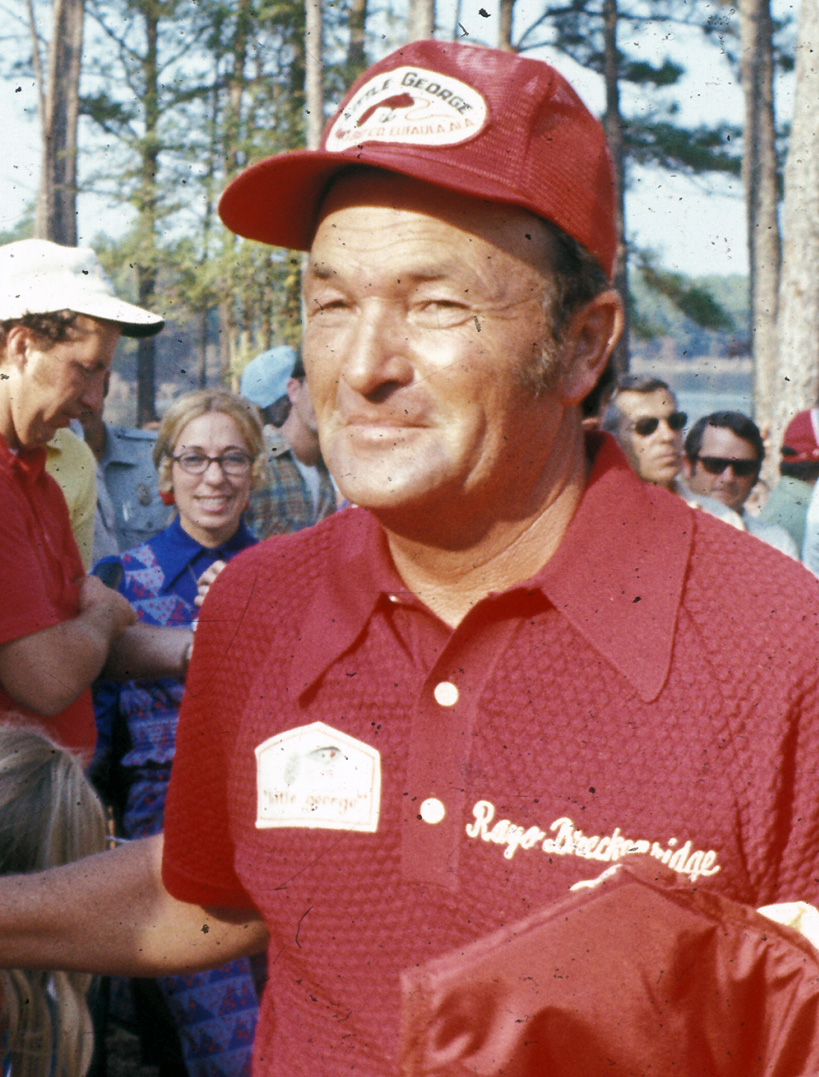
Rayo Breckenridge (1928—1995) Rayo Franklin Breckenridge was born in 1928 in Beech Grove, Arkansas. After marrying his high school sweetheart, Marilyn Taylor, he settled down and began a successful 20-year career as a cotton farmer. Rayo’s hobbies, outside of his family, were hunting and fishing the woods, lakes, and rivers of Northeast Arkansas.
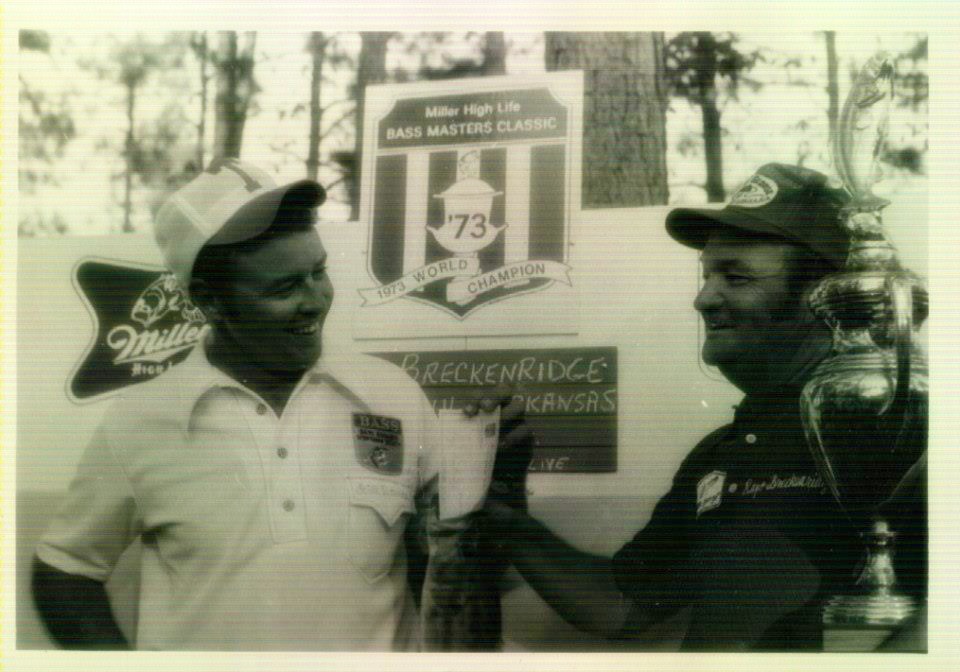
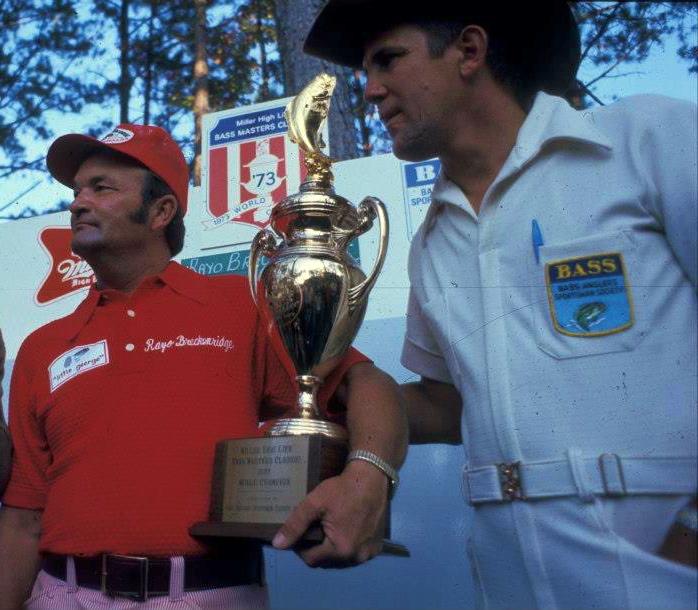
In the late 1960s, he became a member of a local bass club and soon after, joined the Bass Anglers Sportsman Society. In 1971 he won the annual Lake Norfork Bass Club “High-Point” Award, earning him a paid entry fee into a B.A.S.S. National tournament. Using that free entry, he fished the 1972 Arkansas National on Lake Ouachita and finished 35th out of over 250 fishermen. Inspired by his strong finish in that tournament, in 1973 he parked the tractor and followed his dream of fishing the B.A.S.S. National Circuit. At the end of that first season, he was ranked fourteenth and qualified to fish in the third Bassmaster Classic. In late October of that year, on Clarks Hill reservoir in South Carolina, his 52-1/2-pound total bested runner-up Bill Dance by more than 3 pounds and Breckenridge was crowned Classic champion as a rookie.
In January of 1974, his weekly television show started on KAIT-TV in Jonesboro, Arkansas. After five years, gaining a strong regional fan following, it went national and aired until Rayo’s retirement in 1988.
Along with his television career, Rayo continued to compete nationally, racking up over 50 top-20 finishes in professional tournaments, and qualifying for six Bass Masters Classics.
Nicknamed “the Gentleman’s Gentleman”, Rayo was known as much for his humble good nature as he was for his skills on the water. He spent countless hours at schools educating the next generation on the opportunities, and responsibilities we all share in regards to wildlife and conservation. Even as his health began to falter, he never turned down an opportunity to speak to groups on issues of conservation and often made guest appearances at MDA, Cystic Fibrosis, and various charity tournaments across the country.
Rayo passed away on Christmas Day in 1995 and was posthumously inducted into the Arkansas Outdoor Sports Hall of Fame in 1998, The Legends of the Outdoors National Hall of Fame in 2012, and the Bass Fishing Hall of Fame in 2014.
-
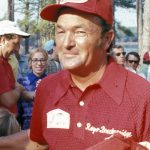
- Rayo Breckenridge: Class of 2014